You read the job description carefully. The responsibilities match what you already do. The salary is higher. The progression is better. Then you reach the line that stops you:
“Experience required.”
Sometimes it says “minimum two years”. Sometimes it simply lists “practical experience requirements essential.” It rarely explains what that truly means.
If you are already working, it can feel confusing. You have handled tasks, supported teams, followed procedures and solved problems. Yet you are unsure whether what you have done counts towards practical experience requirements.
If you are not currently working, the frustration can feel heavier. How are you expected to meet practical experience requirements if entry-level roles also demand experience?
The phrase appears simple, but in reality it reflects employer risk management, compliance expectations, regulatory standards and productivity concerns. Understanding practical experience requirements clearly allows you to reposition your experience and qualifications in a way that employers recognise.
This article explains exactly what practical experience requirements mean, why employers use the phrase, and how recognised Level 2 qualifications can strengthen formal evidence of competence in England.
Table of Contents
Quick Answer: What Do Employers Really Mean by “Experience Required”?
In England, practical experience requirements refer to an employer’s need for proven, applied competence in a role. It means the ability to perform tasks safely, consistently and independently in real working conditions. Recognised Level 2 qualifications often provide structured evidence that supports meeting practical experience requirements in regulated and non-regulated sectors.
What This Means For You
This applies to you if:
- You see practical experience requirements listed on job adverts
- You have worked in similar roles but lack formal certification
- You want progression into supervisory or regulated sectors
- You want clearer proof of capability on your CV
This may not apply if:
- The role requires chartered status or statutory registration
- You already hold advanced regulated professional qualifications
Why it matters:
- Employers shortlist using measurable evidence
- Practical experience requirements often combine experience and recognised training
- A Level 2 qualification strengthens structured proof of competence
- Understanding expectations reduces repeated rejection cycles
What Are Practical Experience Requirements?
Practical experience requirements are not simply about time served. They refer to demonstrated competence in performing specific tasks under real working conditions.
Employers use this phrase as a filtering tool. It helps them assess:
- Applied knowledge
- Consistency
- Compliance awareness
- Accountability
- Operational readiness
In sectors such as health and social care, childcare, cyber security, business administration, warehousing and team leading, practical experience requirements are often linked to regulatory oversight.
The Care Quality Commission expects employers to demonstrate staff competence in care settings. The Office for Standards in Education (Ofsted) inspects educational environments. Data protection roles require knowledge of GDPR compliance and oversight by the Information Commissioner’s Office. These standards influence job descriptions and reinforce practical experience requirements.

Why Employers Emphasise Practical Experience Requirements
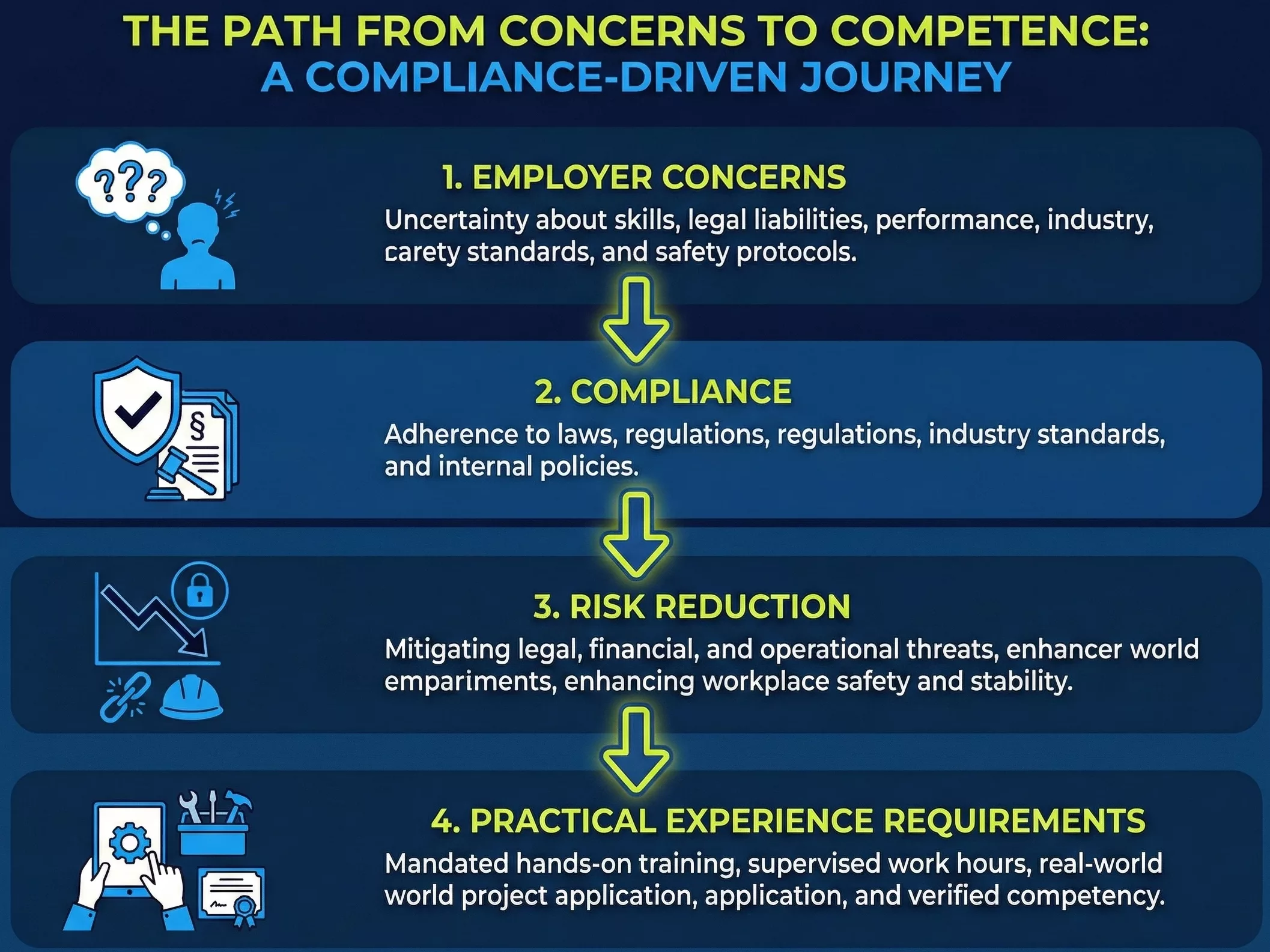
1. Risk Reduction
Employers must protect clients, customers and service users. Hiring someone without proven competence increases liability and operational risk.
2. Regulatory Compliance
Regulated industries must evidence training. Ofqual regulates awarding bodies such as NCFE and TQUK. Employers recognise qualifications awarded by these bodies as structured, externally quality assured evidence.
3. Productivity Assurance
Training new employees carries cost. Employers use practical experience requirements to ensure candidates can operate with minimal supervision.
4. Insurance and Governance
Insurance policies and internal governance frameworks often require documented training and evidence of competence.
Practical experience requirements therefore act as shorthand for multiple operational priorities.
The Risk and Compliance Dimension
In adult social care, safeguarding failures carry legal consequences. In cyber security, breaches can trigger ICO investigations and reputational damage. In warehousing, health and safety failures can lead to enforcement action under HSE regulations.
Employers therefore interpret practical experience requirements as:
- Evidence of policy awareness
- Understanding of safeguarding frameworks
- Knowledge of equality and diversity standards
- Familiarity with data protection obligations
- Awareness of workplace health and safety
Recognised Level 2 qualifications typically include modules covering legislation, duty of care and procedural understanding, aligning closely with these expectations.
The Mechanism Explained: Adult Skills Fund and Recognised Qualifications
Understanding funding mechanisms builds trust and clarity around how qualifications strengthen practical experience requirements.
Funding flow:
Government → Adult Skills Fund → Accredited College → My Free Course → Learner
The Adult Skills Fund exists to close national skills gaps in priority sectors. Accredited colleges deliver recognised Level 2 qualifications awarded by bodies such as NCFE and TQUK, regulated by Ofqual.
My Free Course operates as a guidance and application gateway. It connects eligible learners aged 19+ in England to accredited colleges delivering fully funded qualifications.
These qualifications are funded because Department for Education labour market data consistently identifies shortages in adult social care, mental health support, cyber security, warehousing, business administration and education support roles.
Employers recognise qualifications delivered through accredited colleges and regulated awarding bodies as reliable, externally quality assured evidence. This strengthens alignment with practical experience requirements.
National Skills Gaps and Employer Expectations
Government labour market publications and Skills for Jobs policy frameworks repeatedly identify shortages in:
- Adult social care
- Mental health support services
- Cyber security
- Logistics and warehousing
- Education support roles
These shortages increase pressure on employers to hire candidates who can demonstrate competence quickly and safely.
Practical experience requirements therefore reflect both workforce demand and inspection frameworks.
Holding a recognised Level 2 qualification strengthens alignment with these expectations because it demonstrates structured assessment and external quality assurance recognised nationally.

Translating Informal Experience into Formal Recognition
Many individuals already possess relevant skills but lack documented validation.
For example, someone working in retail may have:
- Customer service experience
- Conflict resolution skills
- Stock control knowledge
- Team coordination exposure
However, without formal recognition, employers may question whether this meets practical experience requirements.
A Level 2 certificate in Customer Service, Team Leading, Business Administration or Warehousing provides structured assessment that translates informal skills into recognised evidence.
This strengthens CV credibility and improves shortlisting outcomes.
Step-by-Step: Strengthening Your Position
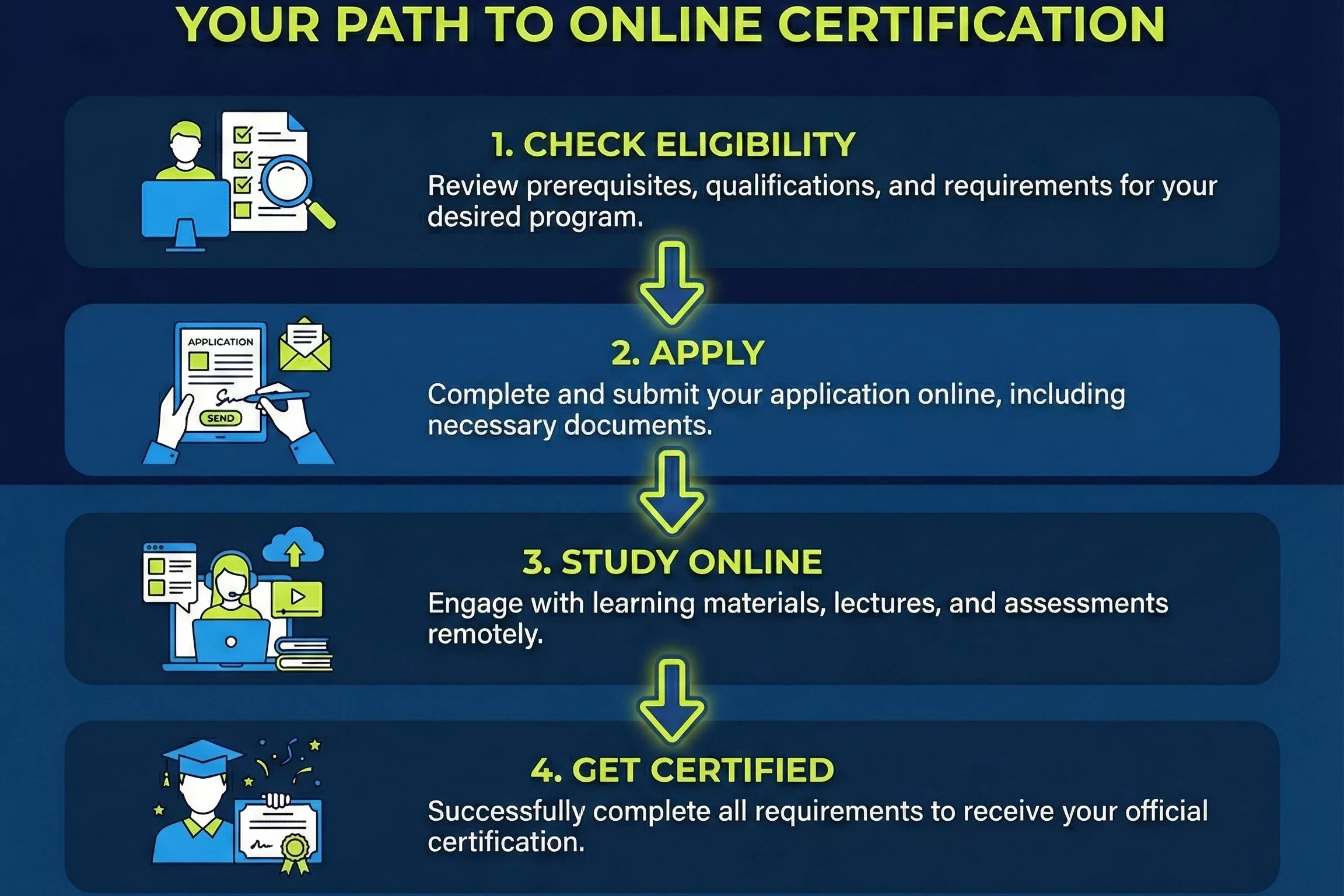
Step 1: Check Eligibility
Confirm you are aged 19+, living in England, and meet income or funding criteria.
Use the postcode checker to verify availability.
Don’t assume you’re ineligible My Free Course walks you through the process step by step.
Step 2: Apply Through My Free Course
My Free Course connects eligible learners to accredited colleges delivering government funded Level 2 qualifications.
Step 3: Study Online
Courses are flexible and coursework based, allowing working adults to complete modules alongside employment.
Step 4: Gain Certification
Upon completion, you receive a recognised Level 2 qualification awarded by an Ofqual regulated body such as NCFE or TQUK.
Common Misunderstandings
“Practical Experience Requirements” Always Means Years of Work
In many cases, employers accept recognised training combined with shorter experience duration.
Informal Skills Do Not Count
They count, but documented assessment strengthens credibility.
Qualifications Replace Experience Entirely
Practical experience requirements usually involve a combination of applied exposure and structured training.
Recommended Level 2 Courses
Level 2 Certificate in Principles of Team Leading
Level 2 Certificate in Preparing to Work in Adult Social Care
Level 2 Certificate in Principles of Cyber Security
Level 2 Certificate in Warehousing and Storage
All courses are delivered through accredited colleges and funded via the Adult Skills Fund for eligible learners in England.
Disclaimer and Support
Eligibility criteria apply. Funding availability depends on residency in England, age 19+, and income or funding rules under the Adult Skills Fund.
My Free Course connects eligible learners to accredited colleges delivering recognised Level 2 qualifications.
This content is for informational purposes only and does not constitute formal advice. Course availability, funding criteria and eligibility requirements are subject to change. Please visit MyFreeCourse.co.uk or contact us directly for the most up-to-date information.
For extra help or questions, please contact us at [email protected].
Explore related funding explanation articles, Level 2 course guides and Trustpilot learner reviews on our blog for further clarity.
even greater clarity as you explore new opportunities.


Learn more and apply today at www.myfreecourse.co.uk
MyFreeCourse.co.uk supports you with fully funded qualifications, supportive tutors and flexible learning, so you can start helping others, one step at a time
FAQs
What exactly do employers mean by practical experience requirements?
When employers refer to practical experience requirements, they are usually signalling that they want more than theoretical knowledge. They are looking for demonstrated, applied competence in real working conditions. This includes the ability to follow procedures accurately, comply with regulations, operate independently, and manage responsibility without constant supervision.
In regulated sectors such as adult social care, childcare, cyber security, logistics and business administration, practical experience requirements are closely linked to inspection frameworks and compliance standards. Employers must evidence staff competence to regulators such as the Care Quality Commission or Ofsted. This means that practical experience is often assessed through both time in role and recognised training.
Holding an accredited level 2 qualification strengthens structured evidence of competence because it demonstrates externally assessed understanding of legislation, duty of care, safeguarding, data protection, and operational procedures. This helps employers feel confident that your experience aligns with regulatory expectations.
Can a level 2 qualification help meet practical experience requirements?
Yes. A recognised level 2 qualification awarded by an Ofqual regulated body such as NCFE or TQUK provides nationally recognised evidence of structured competence.
These qualifications assess more than attendance. They evaluate understanding of legislation, policy awareness, safeguarding responsibilities, documentation standards and role-specific procedures. In many sectors, employers treat a level 2 qualification as evidence that you understand compliance frameworks and operational risk.
While practical experience requirements often combine work exposure with training, a level 2 certificate strengthens your position significantly. It translates informal or unstructured experience into formal recognition, which improves shortlisting outcomes and reduces employer uncertainty.
How does government funding relate to practical experience requirements?
Government funding through the Adult Skills Fund exists to address national skills gaps in priority sectors such as adult social care, mental health support, cyber security, warehousing and education support roles.
The funding flow operates as follows:
Government → Adult Skills Fund → Accredited College → My Free Course → Learner
Accredited colleges deliver regulated level 2 qualifications that are externally quality assured. My Free Course acts as a guidance and application gateway, connecting eligible learners in England to funded opportunities.
By completing a funded level 2 qualification, learners strengthen documented competence that aligns directly with employer practical experience requirements. Government funding ensures workforce capability improves in sectors where compliance, safety and productivity are critical.
Who is eligible for funded level 2 courses?
Eligibility for funded level 2 qualifications typically requires:
Being aged 19 or over
Living in England
Meeting income or funding criteria under Adult Skills Fund rules
Funding availability can vary depending on postcode and local authority allocation. The postcode checker confirms whether courses are available in your area and whether you meet the eligibility requirements.
These qualifications are delivered by accredited colleges and awarded by Ofqual regulated bodies, ensuring that public funding supports recognised, quality assured training that strengthens practical experience requirements across multiple sectors.
Why are practical experience requirements so common in regulated sectors?
Regulated sectors operate under inspection frameworks, safeguarding duties and legal compliance standards. Employers must demonstrate that staff are competent, trained and aware of legislation.
For example:
In adult social care, the Care Quality Commission assesses staff training and competence.
In childcare settings, Ofsted inspections evaluate safeguarding and procedural knowledge.
In cyber security and data protection roles, compliance with GDPR and ICO guidance is essential.
In warehousing and logistics, health and safety requirements are enforced under HSE regulations.
Practical experience requirements help employers reduce operational risk, protect service users, and maintain compliance. Recognised level 2 qualifications strengthen documented evidence of readiness, which is why they are often viewed favourably during recruitment and internal progression decisions.